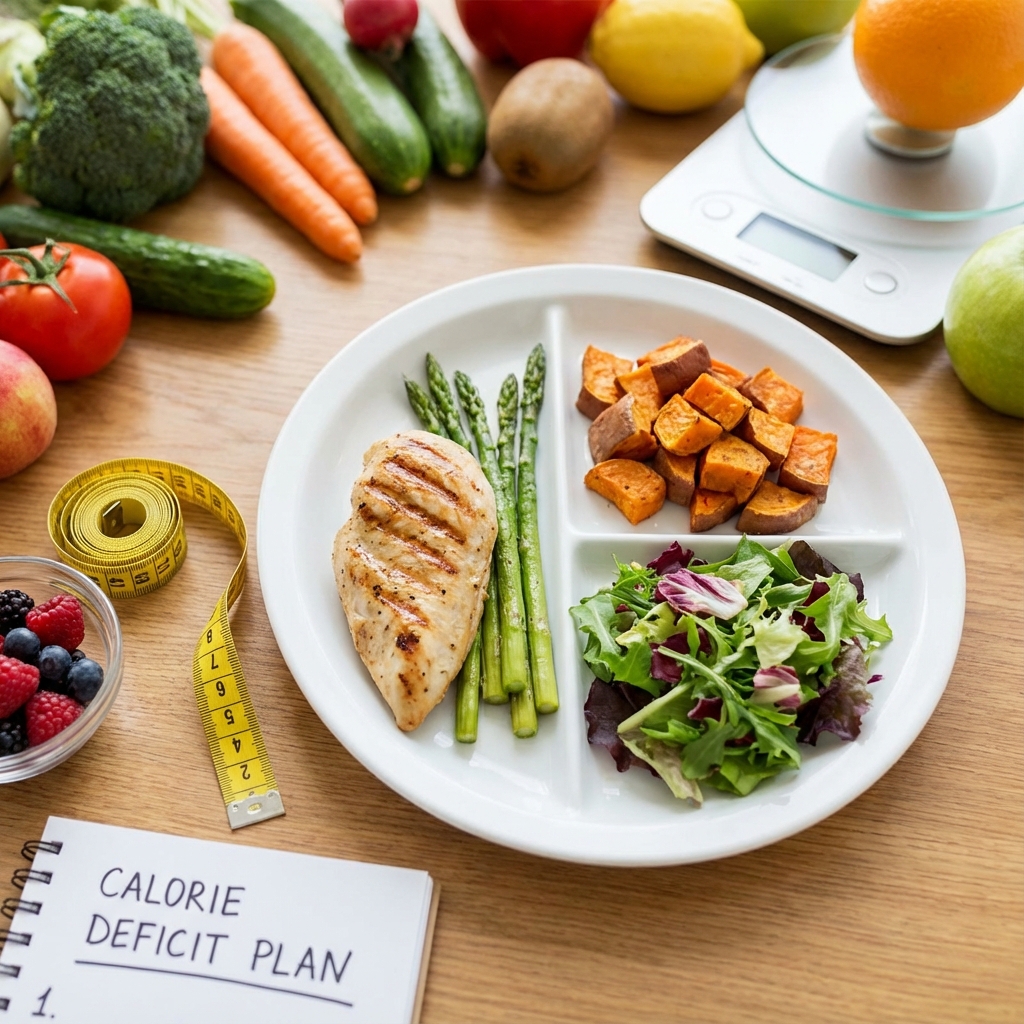
Here is the truth that the diet industry does not want you to know: every single diet that has ever worked, from keto to vegan to intermittent fasting, works because it creates a calorie deficit. That is it. There is no magic food combination or meal timing trick. If you eat fewer calories than you burn, you will lose weight.
This guide will teach you exactly how to create a sustainable calorie deficit that leads to lasting fat loss without extreme restriction, constant hunger, or losing muscle. Let's get started.
💡 The Bottom Line
A calorie deficit of 300-500 calories per day leads to fat loss of 0.5-1 kg (1-2 lbs) per week. This is the sweet spot for sustainable weight loss that preserves muscle and keeps you sane.
What Is a Calorie Deficit?
A calorie deficit means you are consuming fewer calories than your body burns. When this happens, your body has to get energy from somewhere, so it taps into stored body fat.
The Weight Loss Equation
Calories In
Food & drinks
Calories Out
Metabolism + activity
Fat Loss
Guaranteed
Your "Calories Out" is called your Total Daily Energy Expenditure (TDEE). It includes your Basal Metabolic Rate (calories burned at rest), exercise, and daily activities like walking, fidgeting, and digesting food.
How to Calculate Your Calorie Deficit
Follow these steps to find your personal calorie target for weight loss:
Step 1: Calculate Your TDEE
Use this formula as a starting point (Mifflin-St Jeor equation):
Men: (10 × weight in kg) + (6.25 × height in cm) - (5 × age) + 5
Women: (10 × weight in kg) + (6.25 × height in cm) - (5 × age) - 161
Then multiply by your activity level:
- • Sedentary (desk job): × 1.2
- • Lightly active (1-2 workouts/week): × 1.375
- • Moderately active (3-5 workouts/week): × 1.55
- • Very active (6-7 workouts/week): × 1.725
Step 2: Create Your Deficit
Subtract 300-500 calories from your TDEE. This is your daily calorie target for weight loss.
| Deficit Size | Weekly Loss | Best For |
|---|---|---|
| 250 cal/day (small) | ~0.25 kg | Maintenance phase, athletes |
| 500 cal/day (moderate) | ~0.5 kg | Most people (recommended) |
| 750 cal/day (aggressive) | ~0.75 kg | Short-term only |
| 1000+ cal/day (extreme) | ~1+ kg | Not recommended |
Step 3: Real World Example
Sarah, 30 years old, 70 kg, 165 cm, moderately active
- BMR: (10 × 70) + (6.25 × 165) - (5 × 30) - 161 = 1,420 cal
- TDEE: 1,420 × 1.55 = 2,200 cal (maintenance)
- Weight loss target: 2,200 - 500 = 1,700 cal/day
Best Foods for a Calorie Deficit
In a calorie deficit, every calorie counts. You want foods that are filling, nutritious, and low in calorie density. Here are the best choices:
🥗 High Volume, Low Calorie (Eat Freely)
These foods let you eat large portions while staying in deficit:
- ✓ Leafy greens (spinach, lettuce, kale)
- ✓ Cucumber, celery, zucchini
- ✓ Tomatoes, bell peppers
- ✓ Mushrooms
- ✓ Broccoli, cauliflower
- ✓ Berries (strawberries, raspberries)
- ✓ Watermelon
- ✓ Egg whites
- ✓ Clear soups
- ✓ Sugar-free gelatin
🍗 High Protein (Essential for Muscle)
Protein keeps you full and preserves muscle during weight loss. Aim for 1.6-2.2g per kg of body weight.
| Food | Calories | Protein |
|---|---|---|
| Chicken breast (100g) | 165 cal | 31g |
| Greek yogurt 0% (200g) | 130 cal | 20g |
| Egg whites (4) | 68 cal | 14g |
| Cod fillet (100g) | 82 cal | 18g |
| Cottage cheese 1% (150g) | 108 cal | 18g |
| Turkey breast (100g) | 135 cal | 30g |
🍠 Smart Carb Choices
Choose carbs that provide fiber and sustained energy:
Best Choices
- • Oats (high fiber, filling)
- • Sweet potato (moderate cal)
- • Quinoa (complete protein)
- • Brown rice (in moderation)
- • Legumes (protein + fiber)
Limit or Avoid
- • White bread
- • Pasta (calorie-dense)
- • White rice (low satiety)
- • Sugary cereals
- • Baked goods
🍬 The Easiest Way to Create a Calorie Deficit: Cut Sugar
Here is a secret: cutting sugar is the easiest way to create a calorie deficit without feeling deprived. The average person consumes 300-500 calories daily from added sugar alone. That is already your deficit, right there.
Sugar is hidden everywhere: sauces, bread, yogurt, granola bars. When you eliminate these hidden sugars, you automatically eat fewer calories without even trying. Plus, removing sugar stabilizes your blood sugar, which means fewer cravings and less hunger.
The Sukali app helps you spot hidden sugars instantly. Snap a photo of any food and see exactly how much sugar it contains. Access hundreds of sugar-free recipes that are naturally low in calories.
Sample 1500 Calorie Meal Plan
Here is what a day at 1500 calories looks like with high protein and volume:
🌅 Breakfast (350 cal)
30g proteinProtein Oatmeal Bowl
40g oats + 1 scoop protein powder + 100g berries + 1 tbsp almond butter
☀️ Lunch (400 cal)
40g proteinGiant Chicken Salad
150g chicken breast + unlimited leafy greens + cucumber + tomato + 1 tbsp olive oil + balsamic
🍎 Snack (150 cal)
15g proteinGreek Yogurt with Berries
200g 0% Greek yogurt + 50g strawberries
🌙 Dinner (500 cal)
45g proteinSalmon with Roasted Vegetables
150g salmon + 200g roasted broccoli + 100g sweet potato + lemon-dill sauce
🍫 Evening Snack (100 cal)
10g proteinCottage Cheese Bowl
100g cottage cheese + cinnamon
Daily Total: 1,500 cal | 140g protein | 150g carbs | 45g fat
Common Calorie Deficit Mistakes
❌ Mistake #1: Cutting Too Many Calories
Going below 1200 calories leads to muscle loss, metabolic slowdown, and inevitable bingeing. A moderate deficit is more sustainable and effective long-term.
❌ Mistake #2: Not Eating Enough Protein
In a deficit, your body can break down muscle for energy. High protein intake (1.6-2.2g/kg) prevents this and keeps you feeling full.
❌ Mistake #3: Ignoring Liquid Calories
Sodas, juices, lattes, and alcohol can add 500+ calories daily. Stick to water, black coffee, and unsweetened tea.
❌ Mistake #4: Weekend Blowouts
A 500 cal/day deficit creates a 3,500 cal weekly deficit. One big Saturday can erase the entire week. Consistency matters more than perfection.
❌ Mistake #5: Not Taking Diet Breaks
Extended deficits cause metabolic adaptation. After 8-12 weeks of dieting, spend 2-4 weeks eating at maintenance to reset hormones.
How Long Should You Stay in a Deficit?
Your body adapts to prolonged dieting by reducing energy expenditure. This is why weight loss stalls and why "starvation mode" feels real. Here is the smart approach:
Active diet phase. Stay in your calculated deficit.
Diet break. Eat at maintenance (TDEE). This resets hormones and metabolism.
Resume deficit if needed, or maintain your new weight.
Frequently Asked Questions
How many calories should I eat to lose weight?
Calculate your TDEE and subtract 300-500 calories. For most women, this is 1200-1600 calories. For most men, 1500-2000 calories. Never go below 1200 calories without medical supervision.
What is a safe calorie deficit?
A deficit of 300-500 calories per day is considered safe and sustainable. This leads to weight loss of 0.25-0.5 kg per week while preserving muscle mass.
Can I exercise in a calorie deficit?
Yes, and you should. Resistance training is especially important to preserve muscle. Cardio can increase your deficit but do not use it as an excuse to eat more.
Why am I not losing weight in a calorie deficit?
Common reasons: underestimating calories (weigh your food), water retention (especially for women), building muscle while losing fat, or your deficit is not as big as you think. Give it 2-3 weeks of accurate tracking before adjusting.
The Bottom Line
A calorie deficit is the only scientifically proven way to lose fat. You do not need to buy special foods, follow complicated meal timing, or eliminate entire food groups. You just need to consistently eat fewer calories than you burn.
Start with a moderate deficit of 500 calories, prioritize protein at every meal, fill up on vegetables, and be patient. One kilogram of fat contains about 7,700 calories. Slow progress is real progress. And remember: the best diet is the one you can stick to.
Ready to Create Your Calorie Deficit?
Quit sugar and your deficit is almost automatic. Scan any food to check its sugar content and get hundreds of satisfying sugar-free recipes in the Sukali app.