How much sugar did you eat today? If you are like most people, you probably have no idea. And that is exactly the problem.
Sugar hides everywhere. That seemingly healthy salad might have 15 grams in the dressing. Your morning coffee could have 30 grams before you even get to breakfast. By the end of the day, you have consumed far more than you realize.
How Much Sugar Should You Eat Daily?
The World Health Organization recommends that added sugars should make up no more than 10% of your daily calories. Ideally, they say, it should be below 5%.
For the average adult, that means:
Maximum recommended: About 50 grams (12 teaspoons) per day
Ideal target: About 25 grams (6 teaspoons) per day
The American Heart Association is even stricter, recommending no more than 36 grams for men and 25 grams for women of added sugar daily.
What Are People Actually Consuming?
Here is the scary part: the average American consumes about 77 grams of added sugar per day. That is more than triple the recommended amount.
Over a year, that adds up to about 60 pounds of added sugar. Just from sugar alone, that is consuming about 100,000 extra calories.
And most people do not even know they are doing it. They think they are eating reasonably healthy because they avoid obvious sweets. But the hidden sugars in everyday foods add up fast.
Where Is All This Sugar Coming From?
Most of the sugar people consume does not come from the sugar bowl. It comes from processed foods where sugar is added during manufacturing.
Drinks are the biggest source. A single can of soda has about 39 grams of sugar. Fruit juice is often just as bad. Sports drinks, energy drinks, and fancy coffee drinks can have even more.
Sauces and condiments are sneaky offenders. Ketchup, BBQ sauce, pasta sauce, salad dressings, and teriyaki sauce all contain significant amounts of sugar.
Bread and baked goods often contain sugar even when they do not taste sweet. Check the label on your sandwich bread.
Flavored yogurt can have as much sugar as a candy bar. Same with granola bars and "healthy" breakfast cereals.
Ready meals and fast food almost always contain added sugar to enhance flavor and shelf life.
The Difference Between Natural and Added Sugar
Not all sugar is the same. There is an important distinction between natural sugars and added sugars.
Natural sugars are found in whole foods like fruits, vegetables, and dairy. These come packaged with fiber, vitamins, minerals, and water, which slow absorption and provide nutritional benefits.
Added sugars are sugars that manufacturers add to processed foods. These have no nutritional value beyond calories and are quickly absorbed, causing blood sugar spikes.
When tracking daily sugar consumption, focus on added sugars. The sugar in an apple is not the same as the sugar in apple juice, even if the numbers on the label look similar.
Example: A Typical Meal
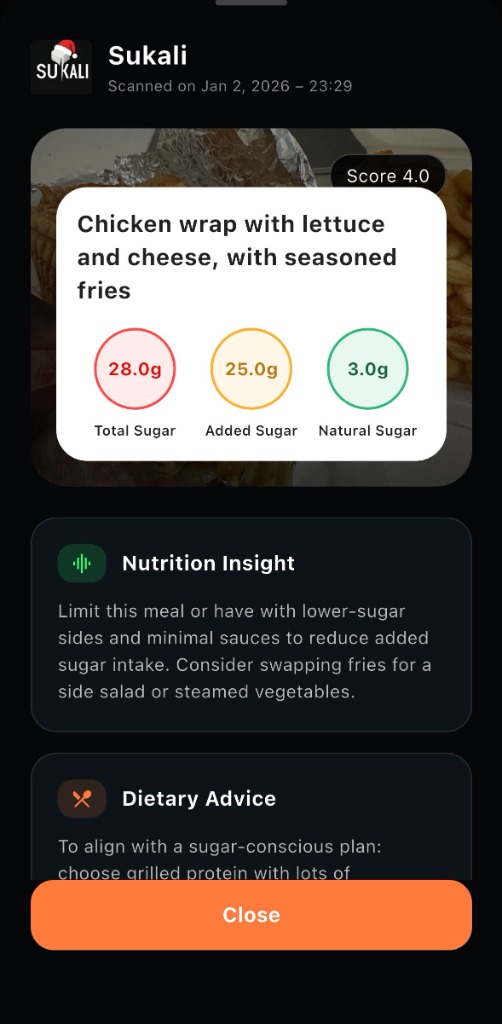
Take a chicken wrap with fries, something many people would consider a normal lunch. Here is what the sugar breakdown might look like:
28g
Total Sugar
25g
Added Sugar
3g
Natural Sugar
That single meal already hits your entire recommended daily limit of added sugar. And most people do not even realize it.
Why Does This Matter?
Excessive sugar consumption is linked to a long list of health problems:
Weight gain is the most obvious. Sugar provides empty calories that do not satisfy hunger, leading you to eat more overall.
Type 2 diabetes risk increases significantly with high sugar intake. Your body becomes less sensitive to insulin over time.
Heart disease is also linked to high sugar consumption. It increases inflammation, triglycerides, and blood pressure.
Fatty liver disease can develop when the liver is overwhelmed by fructose and starts converting it to fat.
Mental health is affected too. High sugar diets are associated with increased rates of depression and anxiety.
How to Track Your Daily Sugar Consumption
The first step to reducing sugar is knowing how much you are actually eating. This is harder than it sounds because sugar hides under so many names on food labels.
You could read every label and do the math yourself. But that is time-consuming and easy to get wrong.
The easier way is to use an app that does it for you. Scan your food and instantly see exactly how much sugar it contains, with a breakdown of natural versus added sugars.
Know Your Daily Sugar Intake
Want to know exactly how much sugar is in your food? Download Sukali and scan any meal or product. You will see the total sugar, added sugar, and natural sugar in seconds, plus dietary advice to help you make better choices.
How to Reduce Your Daily Sugar Intake
Once you start tracking, reducing becomes much easier. Here are some practical strategies:
Cut sugary drinks first. This is the single biggest change you can make. Switch to water, unsweetened tea, or black coffee.
Check sauces and condiments. Make your own dressings or choose low-sugar options..
Choose plain versions. Plain yogurt instead of flavored. Plain oatmeal instead of instant packets. Add your own fruit for sweetness.
Cook more at home. When you cook, you control what goes in. Restaurant and packaged foods almost always contain more sugar.
Read labels religiously. Sugar has over 50 different names on labels. If it ends in -ose (sucrose, fructose, maltose) or includes words like syrup, nectar, or juice concentrate, it is sugar.
The Bottom Line
Most people consume two to three times more sugar than they should, and they do not even know it. The sugar is hidden in everyday foods that do not even taste sweet.
The first step to reducing your daily consumption of sugar is awareness. Track what you eat for a week and you will probably be shocked at the numbers.
Once you know where your sugar is coming from, cutting back becomes much easier. And the health benefits, from weight loss to better energy to reduced disease risk, are well worth the effort.
Start Tracking Your Sugar Today
Download Sukali to scan any food and see exactly how much sugar it contains. Know your daily consumption and take control of your health.