Let me be honest with you right from the start. The term healthy sugar is a bit of a contradiction. All sugars, whether from a candy bar or a mango, are processed by your body in similar ways. But that does not mean all sugar sources are equal. The context matters a lot.
This guide will help you understand what actually makes some sugars better than others, which ones to choose when you need something sweet, and how to reduce your overall intake without feeling deprived.
The Truth About Sugar
Here is what I wish someone had told me years ago. Your body does not really distinguish between healthy and unhealthy sugar at the molecular level. Glucose is glucose. Fructose is fructose. Whether it comes from table sugar, honey, or an apple, your liver processes it the same way.
But, and this is a big but, the package that sugar comes in makes all the difference. An apple contains sugar, yes, but it also contains fiber, vitamins, antioxidants, and water. A soda contains sugar and nothing else useful. That fiber in the apple slows down absorption, prevents blood sugar spikes, and keeps you full. The soda hits your bloodstream like a truck.
So when we talk about healthy sugar, we are really talking about the delivery mechanism. Sugar wrapped in fiber and nutrients is fine. Isolated sugar dumped into processed food is not.
Natural Sugars vs Added Sugars
This is the most important distinction. Natural sugars are found in whole foods like fruits, vegetables, and dairy. They come with fiber, vitamins, minerals, and water. Your body handles them well because they are absorbed slowly.
Added sugars are sugars put into foods during processing. Table sugar, high fructose corn syrup, honey in your coffee, maple syrup on your pancakes. Even if the source is natural, once you extract it and add it to food, the health benefits disappear. You are left with pure sugar that spikes your blood glucose.
The World Health Organization recommends less than 25 grams of added sugar per day. The average American consumes around 77 grams. That gap is where most health problems come from.
The Healthier Sugar Options
If you are going to use sweeteners, some options are slightly better than refined white sugar. Here is my honest ranking.
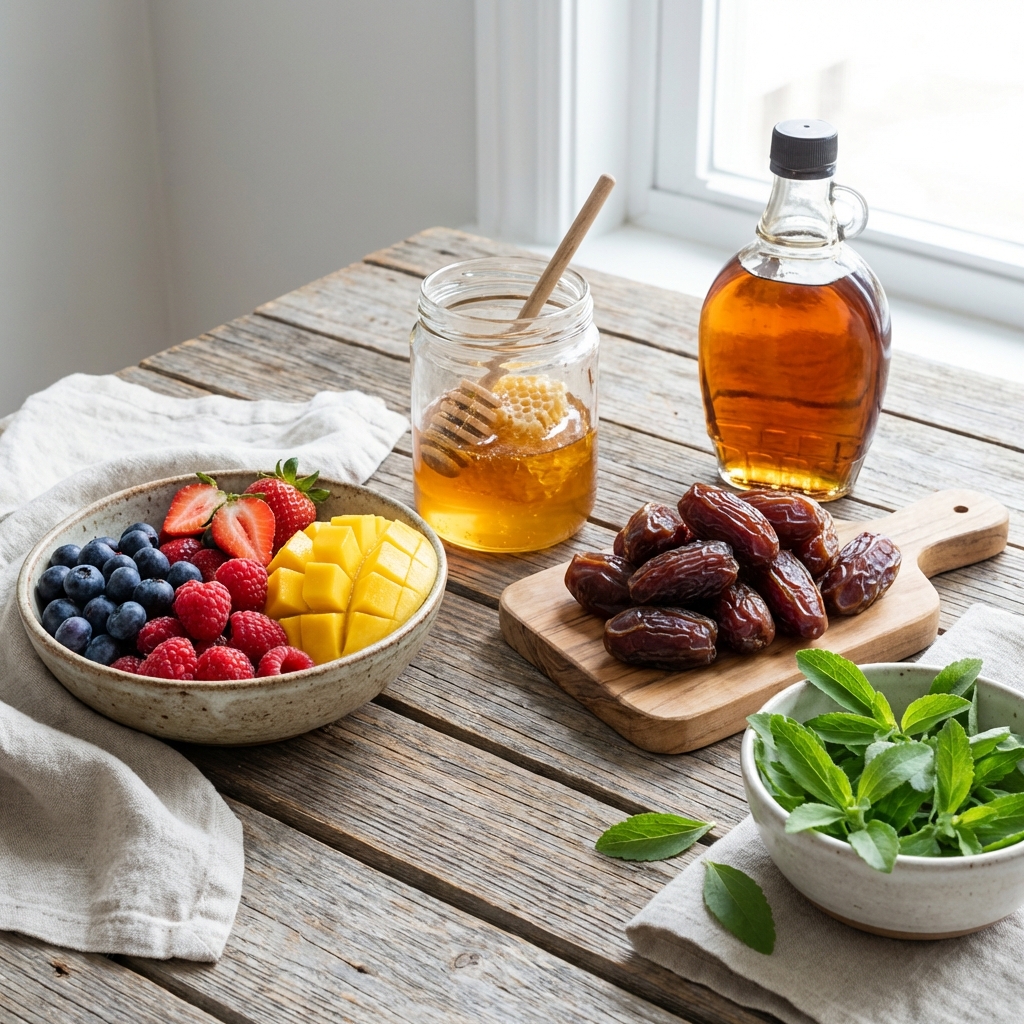
Whole fruits are the absolute best way to satisfy a sweet tooth. You get the sweetness plus fiber, vitamins, and antioxidants. A bowl of berries, sliced mango, or a banana will give you that sweet fix while actually nourishing your body. This is true healthy sugar.
Dates are nature's candy. They are incredibly sweet but come with fiber, potassium, and antioxidants. Great for baking or making energy balls. Still high in sugar though, so moderation matters.
Raw honey contains some antioxidants and has antibacterial properties. Better than refined sugar? Marginally. But it is still 80 percent sugar, so do not kid yourself into thinking it is healthy. A small drizzle is fine. Drowning your food in it is not.
Pure maple syrup contains some minerals like manganese and zinc. It has a lower glycemic index than table sugar. But again, it is still sugar. Use sparingly.
Stevia and monk fruit are zero-calorie natural sweeteners. They do not raise blood sugar at all. Great options if you are specifically trying to reduce sugar intake while still enjoying sweet tastes.
Find Hidden Sugars in Your Food
Sugar hides in foods you would never expect. 73 percent of packaged foods contain added sugar. Use the Sukali app to scan any product and see exactly how much sugar is inside.
Download FreeSugars to Avoid Completely
These are the sugars that do the most damage and offer zero benefits.
High fructose corn syrup is the worst of the worst. It is linked to fatty liver, obesity, and metabolic problems. Found in most sodas and processed foods. Avoid it completely.
Refined white sugar provides empty calories and no nutrients. It spikes blood sugar fast and crashes it just as quickly.
Brown sugar is just white sugar with molasses added. It is not healthier despite the marketing.
Agave nectar is marketed as healthy but contains up to 90 percent fructose. That is worse than high fructose corn syrup. Your liver takes a beating processing all that fructose.
The Real Solution
Instead of searching for healthy sugars, the smarter approach is to reduce your overall sugar intake. Here is why this matters.
Your taste buds adapt. After 2 weeks of low sugar eating, foods taste sweeter naturally. An apple becomes incredibly satisfying. Things you used to love taste overwhelmingly sweet.
Energy becomes stable throughout the day. No more afternoon crashes. No more needing sugar to power through. Just consistent energy from morning to night.
Cravings decrease dramatically. The less sugar you eat, the less you want. It sounds counterintuitive but it is absolutely true.
Weight management becomes easier. Sugar is the number one driver of overeating for most people. Remove it and calorie control becomes almost automatic.
How to Start
Do not try to be perfect immediately. That sets you up for failure. Instead, take it week by week.
Week 1: Start reading labels. You will be shocked at how much sugar is in foods you thought were healthy. Yogurt, granola, salad dressing, bread. Track everything for one week without changing anything.
Week 2: Eliminate sugary drinks first. This alone can cut 300 plus calories daily. Switch to water, unsweetened tea, or black coffee.
Week 3 and beyond: Replace snacks. Swap cookies and candy for whole fruits, nuts, or dark chocolate at 85 percent or higher. Your cravings will start to fade.
The Bottom Line
There is no truly healthy sugar in the sense that it is good for you. But sugar from whole fruits is far superior to added sugars. If you need sweeteners, stick to small amounts of honey, maple syrup, or zero-calorie options like stevia.
The healthiest approach is to reduce overall sugar consumption and train your taste buds to appreciate natural sweetness. After a few weeks of cutting sugar, you will not miss it. And you will feel dramatically better.
Ready to Cut Your Sugar Intake?
Download Sukali to scan foods for hidden sugars and get 100+ sugar-free recipes. Make healthier choices easy.