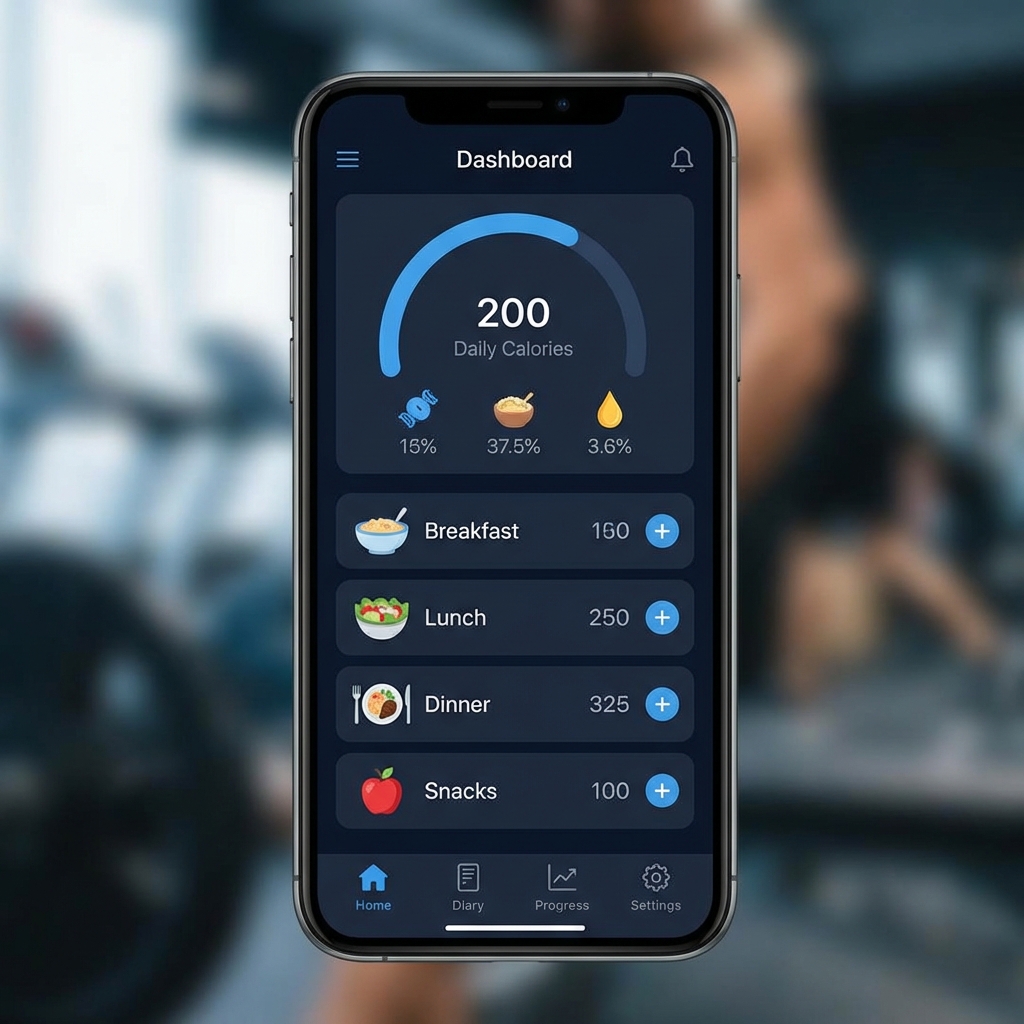
MyFitnessPal is the most popular calorie counting app in the world. Millions of people use it daily to track their food intake. I was one of them for years. Multiple weight loss attempts, periods of strict tracking, followed by periods of burnout and regain.
This review is based on years of real use, not just a quick test. I will cover what MyFitnessPal does well, where it fails, the pricing situation, and ultimately why I think there is a better approach to weight loss.
What Is MyFitnessPal?
MyFitnessPal is a calorie and nutrition tracking app that has been around since 2005. It was acquired by Under Armour in 2015, then sold to private equity in 2020. The app has over 14 million foods in its database, making it easy to find and log almost anything you eat.
You set a calorie goal based on your weight loss target, then log everything you eat throughout the day. The app shows your remaining calories and macro breakdown. Simple concept, massive execution.
How MyFitnessPal Works
Database search. Type in what you ate, and MyFitnessPal finds matches from its database. You select the item and portion size.
Barcode scanning. Scan packaged foods to instantly log them. This is one of the best features because it is fast and accurate for brand-name products.
Custom foods and meals. You can create entries for homemade recipes and save frequent meals for quick logging.
Exercise tracking. Log workouts to earn extra calories. The app integrates with fitness devices and other apps.
Social features. Connect with friends, share progress, and participate in challenges.
What MyFitnessPal Does Well
Massive database. 14 million foods means you can find almost anything. Restaurant meals, brand products, international foods. If it exists, it is probably in MyFitnessPal.
Barcode scanning accuracy. For packaged foods, scanning works perfectly. This is the fastest way to log processed foods.
Recipe calculator. You can input your own recipes and the app calculates nutritional information. Great for home cooks.
Integrations. MyFitnessPal connects with Fitbit, Apple Watch, Garmin, Strava, and many other fitness apps and devices.
Long track record. The app has been around for nearly 20 years. It works, it is stable, and it is proven.
Where MyFitnessPal Falls Short
Inaccurate database entries. Because users can add foods, the database contains many errors. I have seen the same food with calorie counts varying by 50 percent. You have to verify entries, which adds time and frustration.
Premium has become expensive. MyFitnessPal used to have a generous free tier. Now many features require premium, which costs around 80 euros per year. For a food diary app, that is steep.
Ads in free version. The free tier is now cluttered with advertisements. It disrupts the user experience significantly.
Tedious logging. Every meal, every snack, every bite needs to be logged. Miss a few entries and your data becomes useless. The cognitive load is exhausting.
Calorie counting limitations. This is the fundamental problem I will discuss in depth below.
Tired of Counting Every Calorie?
Try focusing on sugar instead. Sukali helps you find hidden sugars in food and lose weight without obsessive tracking.
Try Sukali FreeMyFitnessPal Pricing in 2026
The pricing structure has changed a lot over the years, and not in favor of users.
Free tier: Basic calorie tracking, barcode scanning, limited food diary. Features that used to be free now require premium. Includes advertisements.
Premium: Around 80 euros per year or 20 euros per month. Removes ads, adds meal plans, macro goals, food analysis, and advanced insights.
The free version is usable but frustrating. If you are serious about using MyFitnessPal, you will likely need premium, which makes this one of the more expensive tracking options.
My Experience With MyFitnessPal
Let me be honest about my history with this app. I have used it during at least five separate weight loss attempts over the years.
The pattern was always the same. Week one, I logged everything meticulously. Saw results. Felt motivated. Week two and three, logging became tedious but I pushed through. Week four or five, I would miss a meal, then a day, then realize I had not logged in a week. Weight would creep back.
The problem was not the app. MyFitnessPal did exactly what it promised. The problem was the approach itself.
Calorie counting requires constant mental energy. You think about food all day. Every decision requires calculation. It is exhausting, and unsustainable for most people long-term.
Why Calorie Counting Often Fails
After years of on-and-off use, I have come to understand why calorie counting failed me repeatedly:
It treats all calories equally. 500 calories of candy affects your hormones, hunger, and energy completely differently than 500 calories of salmon and vegetables. Calorie counting ignores this.
It fights your body. When you restrict calories, your body responds by increasing hunger and decreasing metabolism. You are fighting against biology, and biology usually wins.
It ignores the cause. Most weight gain comes from hormonal issues driven by sugar and processed foods. Address the cause, and weight loss becomes easier. Calorie counting just treats symptoms.
It is not sustainable. How many people log calories for life? Almost none. And when they stop, the weight returns because nothing fundamental changed.
It creates obsession. Constantly thinking about numbers and food creates an unhealthy relationship with eating.
A Different Approach: Target Sugar
What finally worked for me was shifting focus from calories to sugar.
Sugar is the main driver of weight gain for most people. It spikes insulin, which promotes fat storage. It triggers cravings for more sugar. It provides empty calories that do not satisfy hunger. It hides in foods you think are healthy.
When you cut sugar, something remarkable happens. Your hunger normalizes. Cravings disappear. You naturally eat less without counting anything. Weight drops without the mental exhaustion.
This is why I switched to Sukali. Instead of tracking every calorie, I just scan foods to check for hidden sugars. The app helps me avoid the one thing that was actually causing my weight problems. No daily logging, no calorie math, no mental exhaustion.
MyFitnessPal vs Sukali: Which Is Better?
Use MyFitnessPal if: You are disciplined enough to log every meal indefinitely, you believe in the calorie counting approach, and you can afford premium.
Use Sukali if: You have tried calorie counting and it did not work long-term, you want simpler sustainable approach, and you believe targeting sugar is more effective than counting calories.
Both apps have their place. But if you are tired of the calorie counting treadmill, addressing sugar might be the change that finally works.
The Bottom Line
MyFitnessPal is a well-made calorie tracking app with an impressive database and reliable features. If calorie counting is your chosen approach, it remains one of the best options available.
However, calorie counting has fundamental limitations that no app can overcome. It requires constant mental effort, ignores the hormonal aspects of weight, and treats all calories as equal when they are not.
For sustainable weight loss, I recommend focusing on sugar. It is simpler, more effective for most people, and does not require logging every bite for the rest of your life. Sometimes the best solution is not a better version of the same approach, but a fundamentally different approach altogether.
Ready to Stop Counting Calories?
Download Sukali to scan foods for hidden sugars. Lose weight without obsessive tracking. Get 100+ sugar-free recipes free.