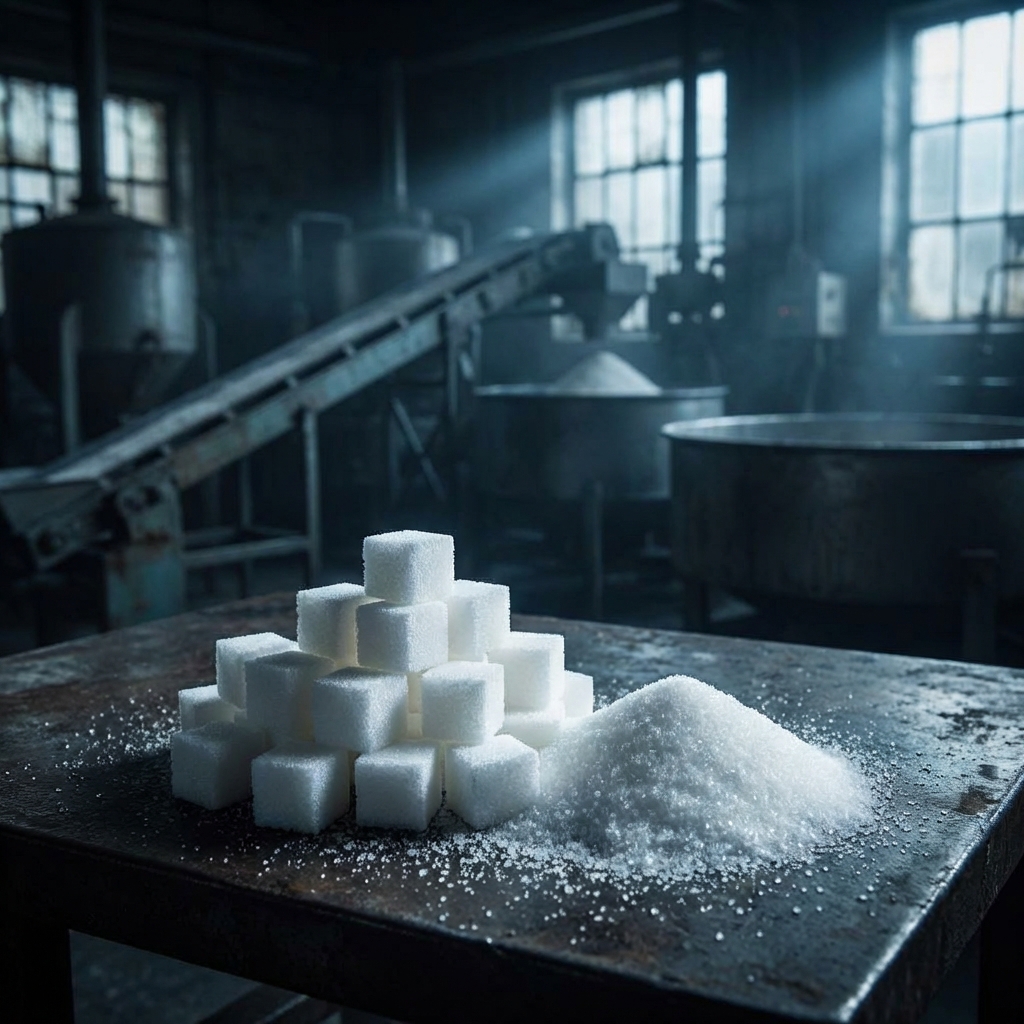
I never thought much about what sugar actually was. It came in a bag, it tasted sweet, I used it. Then I learned how processed sugar is made, and it changed everything. What ends up in your coffee or baked goods has been through a chemical process that strips away anything remotely natural.
Understanding the difference between processed sugar and natural sugar is the first step to making better choices for your health.
What Is Processed Sugar?
Processed sugar, also called refined sugar, starts as sugarcane or sugar beets. But what ends up in your kitchen is nothing like the original plant.
The plants are crushed to extract juice, which is then bleached, heated, filtered, and crystallized. Every vitamin, mineral, and nutrient is removed. What remains is pure sucrose, a chemical compound of glucose and fructose with zero nutritional value.
That white powder is not food. It is an industrial product designed for one purpose: to make things taste sweet.
How Sugar Is Processed
Here is what happens to turn a plant into white sugar:
Step 1: Extraction. Sugarcane is crushed and the juice is extracted. Sugar beets are sliced and soaked to pull out the sugar.
Step 2: Clarification. The juice is mixed with lime and heated to remove impurities. This also removes most nutrients.
Step 3: Evaporation. Water is boiled off to create a thick syrup.
Step 4: Crystallization. The syrup is spun in centrifuges to form crystals. Raw sugar is produced at this stage.
Step 5: Refining. Raw sugar is melted, filtered through bone char or activated carbon, and recrystallized. This is what makes sugar white.
Spot Processed Sugar in Foods
Processed sugar hides under 60+ different names. Use Sukali to scan any product and see exactly what type of sugar is inside.
Download FreeProcessed Sugar vs Natural Sugar
People sometimes ask if all sugar is the same. Chemically, yes. Sucrose is sucrose. But context matters enormously.
Natural sugar in fruit comes packaged with fiber, water, vitamins, and antioxidants. The fiber slows absorption, preventing blood sugar spikes. You also cannot eat unlimited fruit because fiber makes you feel full.
Processed sugar enters your bloodstream immediately with nothing to slow it down. There is no fiber, no nutrients, nothing to signal fullness. You can consume massive amounts without your body telling you to stop.
This is why you can easily drink three glasses of orange juice but you would struggle to eat six whole oranges. The processing removes everything that keeps consumption in check.
Where Processed Sugar Hides
You know candy and soda contain processed sugar. But manufacturers add it to almost everything.
Bread. Most commercial bread contains 2-4 grams of sugar per slice.
Pasta sauce. A half cup can contain as much sugar as two cookies.
Yogurt. Flavored yogurt often has more sugar than ice cream.
Salad dressing. Many dressings are essentially sugar sauces.
Sports drinks. Marketed as healthy but loaded with processed sugar.
Granola bars. Often contain as much sugar as candy bars.
Health Effects of Processed Sugar
Weight gain. Processed sugar provides calories with no nutrition or satiety. It is the easiest way to overconsume calories without realizing it.
Insulin resistance. Constant sugar spikes force your pancreas to pump out insulin. Over time, cells become resistant, leading to type 2 diabetes.
Fatty liver disease. Fructose, which is half of processed sugar, goes straight to your liver. Excess fructose causes fat buildup leading to non-alcoholic fatty liver disease.
Inflammation. Processed sugar triggers inflammatory responses throughout your body.
Heart disease. Research links high sugar intake to increased heart disease risk, independent of weight.
Addiction. Sugar activates the same brain pathways as cocaine. It is genuinely addictive.
Names for Processed Sugar
Manufacturers use many names to hide sugar on ingredient lists:
Sucrose, high-fructose corn syrup, dextrose, maltose, corn syrup, cane sugar, beet sugar, invert sugar, malt syrup, rice syrup, corn sweetener, crystalline fructose, evaporated cane juice, and many more.
If an ingredient ends in "ose" or contains "syrup," it is likely sugar.
How to Avoid Processed Sugar
Read every label. Most people are shocked when they start checking how much sugar is in everyday foods.
Cook from scratch. When you make your own food, you control the ingredients.
Choose whole foods. Meat, vegetables, eggs, and unprocessed grains contain no added sugar.
Use natural sweeteners. Stevia, monk fruit, and erythritol provide sweetness without the health effects of processed sugar.
Reduce gradually. Your taste buds adapt. After a few weeks without sugar, foods that once tasted normal will seem too sweet.
The Bottom Line
Processed sugar is not food. It is an industrial product with zero nutritional value that your body was never designed to consume in large amounts. It has been engineered to taste irresistible while causing metabolic damage.
The less processed sugar you eat, the better you will feel. Your energy will stabilize, cravings will decrease, and your risk of chronic disease will drop. Cutting processed sugar is one of the single most impactful changes you can make for your health.
Ready to Quit Processed Sugar?
Download Sukali to scan foods for hidden processed sugars and get 100 plus sugar-free recipes.